

Simo high voltage motors are typically used in industrial applications where reliable and high-performance machinery is neededMotor spare parts. Wiring these motors properly is crucial to ensure safety and optimal functionality. Here’s a general guide on how to wire a Simo high voltage motor:
1. Safety First
– Disconnect Power: Before beginning the installation or wiring process, ensure the power supply is completely disconnected to prevent any accidents.
– Use Proper PPE: Wear insulated gloves and other personal protective equipment (PPE) to avoid electric shock.
– Verify Grounding: Ensure that the motor and all components are grounded properly to prevent electrical hazards.
2. Check the Motor’s Nameplate
– The motor’s nameplate will have important details such as:
– Voltage rating
– Full-load current (amps)
– Number of phases (typically 3-phase for high voltage)
– Frequency (50Hz or 60Hz)
– Connection type (Delta or Wye)
This will guide you in selecting the appropriate wiring and setting up your motor.
3. Selecting the Right Cable and Connectors
– Cable Size: Ensure that the cables used are capable of handling the motor’s full-load current and voltage. For high voltage motors, heavy-duty cables (such as 3-phase cables) should be used.
– Connectors: Choose connectors that match the motor’s terminals. For high voltage applications, use properly rated connectors to avoid overheating and failure.
4. Motor Connection: Delta or Wye
– High voltage motors can be wired in either a Delta (Δ) or Wye (Y) configuration. This will depend on the motor’s design and the power supply available.
– Delta (Δ) Connection: Typically used for higher voltage and lower current applications. In a Delta configuration, each of the three motor windings is connected in a triangle shape, where the phase wires are connected at the corners.
– Wye (Y) Connection: Typically used for low voltage or when starting the motor at lower power and transitioning to full power. In a Wye connection, all three winding ends are connected to a common point, and the other ends are connected to the phase wires.
Note: The motor’s connection type should match the power supply voltage and phase configuration.
5. Wiring the Motor
– Three-phase wiring should be used for high-voltage motors. Use the three-phase wires (typically labeled L1, L2, and L3) for connection.
1. Delta Connection: Connect the L1, L2, and L3 phase wires to the respective terminals of the motor windings.
2. Wye Connection: Connect L1, L2, and L3 to the winding ends, with the neutral (N) point from the motor windings.
– Grounding: Always connect the motor’s ground terminal to the ground of the electrical system to prevent any faults.
6. Motor Protection
– Circuit Breaker/Overload Protection: Install an appropriate circuit breaker or overload relay according to the motor’s specifications. This will protect the motor from any short circuits or overload conditions.
– Vibration Monitoring: In some cases, high-voltage motors are equipped with vibration sensors to monitor performance and prevent damage due to mechanical failure.
7. Test the Wiring
– After completing the wiring, perform a visual inspection to ensure there are no loose connections.
– Use a multimeter to check the resistance between terminals and ensure there are no short circuits.
– Test the motor with the power supply disconnected first, ensuring the wiring is correct.
8. Start the Motor
– Once everything is wired correctly and the system is confirmed to be safe, power on the system and monitor the motor’s operation.
– Check for any unusual noise, vibrations, or overheating during the first few minutes of operation.
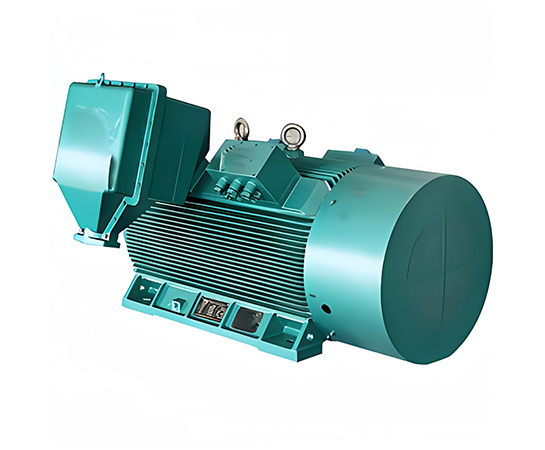
Always refer to the manufacturer’s manual for specific wiring diagrams and additional instructions.

 关注微信公众号


